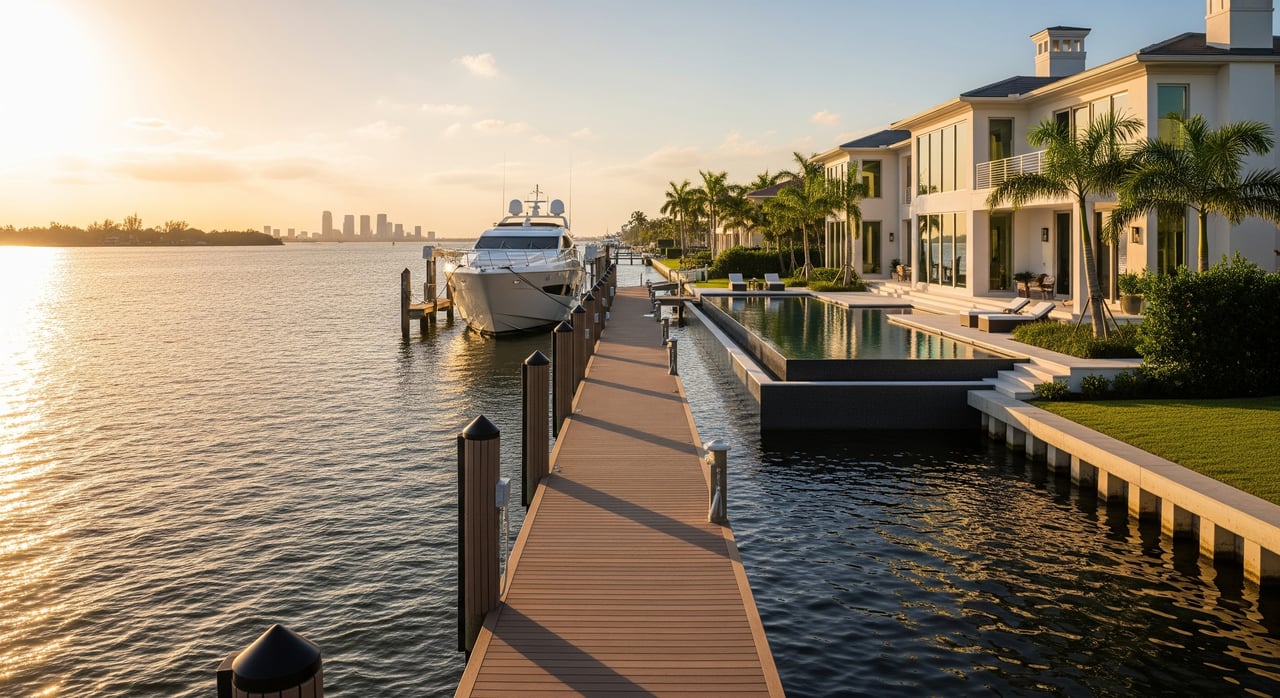
Shopping waterfront in Tampa Bay and eyeing homes above the standard mortgage limits? You are not alone. Many coastal properties here need financing that goes beyond conforming loans, and the rules can feel opaque. In this guide, you will learn how jumbo loans work, what lenders expect on waterfront homes, how insurance drives approvals, and the steps to get fully underwritten early so you can compete with confidence. Let’s dive in.
What counts as a jumbo loan
A jumbo mortgage is any first mortgage that exceeds the conforming loan limit set each year by the Federal Housing Finance Agency. If your loan amount is above your county’s conforming limit, it is considered nonconforming, or jumbo, and it is not eligible for purchase by Fannie Mae or Freddie Mac. You can check the current limits through the FHFA conforming loan limits.
In Tampa Bay, many waterfront homes sit above those limits. That means you will often use a jumbo product and work with a lender that keeps loans on its own books or sells to private investors. Because every lender sets its own policies, getting clear on requirements early is key.
Why waterfront adds complexity
Waterfront properties are in high demand for views and boating access, which drives price and competition. They also come with added variables that lenders review closely. Flood zones and storm surge exposure matter, as do seawall, dock, and elevation details. Insurance availability and cost in Florida can be a gating item. On the valuation side, luxury waterfront homes are unique, so finding comparable sales can take longer and involve more adjustments.
If you want background on coastal risks and long-term shoreline change, explore NOAA coastal risk resources. These resources will not replace lender requirements, but they help you frame risk discussions with your team.
Jumbo underwriting basics
Jumbo underwriting is not one size fits all. Since these loans do not follow a single investor’s rulebook, lenders set their own credit, income, asset, and property overlays. You will see variation in allowable loan-to-value, debt-to-income, and reserve rules.
- LTV: Many jumbo purchases allow up to 80 percent for primary residences, while some lenders cap lower and a few portfolio programs go higher for strong files.
- DTI: Maximums often sit in the 43 to 50 percent range, with flexibility for excellent credit and strong reserves.
- Reserves: Expect to document several months of principal, interest, taxes, and insurance after closing. For high-value waterfront homes, 6 to 12 months or more is common depending on your profile and the program.
Documentation is more thorough than you may be used to:
- Income: Two years of tax returns for most borrowers. Self-employed buyers usually provide business returns and year-to-date profit and loss.
- Assets: Recent statements for all accounts used for funds to close and reserves, with clear sourcing of large deposits.
- Credit and employment: Strong scores help with pricing, and lenders commonly verify employment and review multiple credit pulls.
- Trusts and entities: If taking title in a trust or LLC, plan on additional paperwork like trust pages or operating agreements.
All mortgages must still meet federal consumer rules. For an overview of ability-to-repay and QM considerations, see the CFPB’s consumer mortgage rules.
Appraisals and property reviews
High-end waterfront appraisals require specialized judgment. Unique lots, views, frontage width, and dock quality can be hard to match with nearby sales. Appraisers may use more distant comparables and apply detailed adjustments. For context on valuing unique properties, the Appraisal Institute’s valuation guidance for unique properties is a helpful reference.
What lenders and appraisers often look for:
- Seawalls and bulkheads: If older or showing movement, an engineer’s report may be requested.
- Docks and lifts: Condition and permits can affect value and lending comfort.
- Elevation: An elevation certificate, when required, shows the lowest floor relative to the Base Flood Elevation, which affects flood insurance rating.
- Surveys and title: An updated survey can flag encroachments, setbacks, and riparian boundaries. Title may reference riparian or littoral rights and any state or municipal easements.
To understand flood mapping and elevation certificates, visit FEMA flood maps and FEMA’s elevation certificate resources.
Insurance drives approvals in Florida
For waterfront financing, insurance can be the make or break item. Lenders need proof of adequate hazard, wind, and flood coverage before they will fund.
- Flood insurance: Standard NFIP limits can be modest for luxury homes. Many buyers combine an NFIP policy with private excess flood to achieve full replacement cost. Learn about the NFIP program and limits through FEMA’s NFIP resources.
- Wind and hurricane: Florida’s coastal exposure means wind coverage is essential. Market conditions and pricing have been volatile, and some lenders have rules about which carriers they accept.
- Citizens availability: Citizens Property Insurance Corporation remains the insurer of last resort in Florida. Some lenders accept Citizens, while others have restrictions. Review details at Citizens Property Insurance Corporation.
- Policy structure: Expect a separate hurricane or wind deductible that is a percentage of dwelling coverage. Lenders review deductibles and may require adjustments or escrowed funds.
The regulatory environment is active. For updates on market stability and carrier rules, consult the Florida Office of Insurance Regulation.
Tips that help bind coverage and satisfy lenders:
- Obtain wind mitigation and flood elevation documentation. Wind mitigation credits can reduce premiums, and elevation above Base Flood Elevation can lower flood cost.
- Start quotes early and secure bindable terms. Provide the lender with a binder that names the mortgagee and confirms coverage and deductibles.
Win the deal with full underwriting
In competitive waterfront segments, a fully underwritten pre-approval can be the advantage you need. The goal is to remove doubt about your ability to close.
- Choose the right lender early
- Focus on lenders with a track record in Tampa Bay jumbo waterfront deals. Ask whether they can issue a full underwrite based on complete documents.
- Private banks and portfolio lenders can be more flexible on unique properties but may price differently. Fit matters.
- Deliver a complete file upfront
- Provide tax returns, W-2s or P&Ls, asset statements, trust or entity documents, and gift letters if applicable.
- Ask for a written list of underwriting conditions and work to clear them before you write the offer.
- Order specialty items quickly
- Discuss with your agent and lender whether an appraisal, survey, or engineer inspection can be ordered early. Practices vary by listing.
- If early ordering is not possible, make sure your lender can prioritize appraisal scheduling and review.
- Secure insurance quotes immediately
- Start flood and wind quotes at the same time as pre-approval. Explore private excess flood if NFIP limits fall short.
- Share bindable quotes with the lender to avoid delays.
- Show reserves and liquidity clearly
- Provide account statements for liquid assets and any pledged securities. If using retirement funds, coordinate with your tax advisor and lender to document access.
- Write a cleaner offer
- Consider higher earnest money and shorter contingency windows that match your fully underwritten status.
- Keep inspection focus tight on critical items like seawall, dock, and roof.
- Consider portfolio or private banking solutions
- For complex assets or timelines, a private banking structure can smooth execution. Compare terms, covenants, and costs with your mortgage advisor.
Practical closing checklist
Gather these items before you shop or as early as possible:
- Two years of federal tax returns, personal and business if applicable
- W-2s and recent paystubs or verification of employment; for self-employed, year-to-date P&L and business bank statements
- Two months of statements for all liquid accounts, plus recent investment or retirement statements
- Gift letter and donor documentation if using gift funds
- Trust pages or LLC operating agreement and EIN if titling in an entity
- Proof of funds for earnest money and closing
- Insurance binder or bindable quotes for hazard, wind, and flood
- Elevation certificate if in a Special Flood Hazard Area
- Survey, or contract language that allows you to obtain one promptly
- Seawall or dock condition reports or plan to order immediately
- HOA documents, if applicable
Common obstacles and fixes
Even great files can hit snags. Here is how to navigate them:
- Appraisal reads low: Ask about an appraisal review or a second opinion. Provide data on dock features, frontage width, and recent sales. Consider price adjustments or additional cash to bridge gaps.
- Insurance cost or availability: Explore private flood options, review deductibles, and discuss premium-driven price adjustments with the seller if affordability changes.
- Seawall or erosion concerns: Obtain an engineer’s report quickly. Lenders may require a repair plan, permits, or an escrow holdback to proceed.
Your next steps
If a Tampa Bay waterfront purchase is on your horizon, set the pace now. Choose a lender with jumbo waterfront expertise, line up a complete underwriting package, and start insurance quotes early. Align your appraisal, survey, and seawall inspections with your offer timeline so you can move decisively when the right property hits the market.
Ready to put a plan in motion? Reach out to our team for guidance on lender introductions, pre-offer prep, and a tailored purchase strategy that fits your goals. When you are ready, connect with Unknown Company to take the next step.
FAQs
What is a jumbo loan for Tampa Bay homes?
- A jumbo mortgage is any first mortgage above your county’s conforming loan limit, which is set by the FHFA and changes annually. Check the current limits at the FHFA conforming loan limits.
What documents do I need for a jumbo mortgage?
- Expect two years of tax returns, income verification, recent bank and investment statements, documentation for large deposits, and any trust or entity paperwork your title requires.
How do flood zones affect jumbo financing on waterfront?
- Lenders require flood insurance for homes in Special Flood Hazard Areas, and you may need an elevation certificate for rating. NFIP limits can be low for luxury homes, so private excess flood is common. See FEMA flood maps.
Will a Citizens insurance policy satisfy my lender in Florida?
- Some lenders accept Citizens, while others set restrictions or prefer private carriers. Availability and terms vary, so confirm early with your lender and review Citizens Property Insurance Corporation.
How can I make a financed offer competitive on a waterfront home?
- Obtain a fully underwritten pre-approval, line up bindable insurance quotes, shorten contingencies, and be ready with a larger earnest deposit to signal strength.